Welcome fellow Recovering Traditionalists to Episode 218, “They Should Already Know This” — 3 Coaching Strategies That Actually Work
“They should already know this.”
“We covered this last year.”
“Why don’t they remember how to [fill in the blank]?”
If you’re a math coach, I’m guessing you’ve heard some version of this lately. Maybe a lot.
And here’s the thing—teachers aren’t wrong. Students SHOULD know it. But they don’t. So now what?
That’s what we’re digging into today. Because post-pandemic students are different. The research backs this up—students are nearly half a grade level behind in math, social-emotional challenges are through the roof, and teachers are exhausted.
So the coaching strategies that worked before? They’re not landing the way they used to.
Today I’m giving you three practical strategies to help teachers shift from “they should know this”—which leads to frustration and blame—to “here’s what we can do about it”—which leads to action and hope.
Ok here’s the reality: Yeah, they should know it. But they don’t. So now what?
We can’t keep teaching as if students have the foundation they’re supposed to have. Because the data tells us they don’t.
So let’s dive into those three strategies to help teachers get past “they should know this!”…And if you are a teacher listening who doesn’t have a math coach, you can use these strategies with your teaching team and do them together.
STRATEGY #1: HELP TEACHERS IDENTIFY THE ACTUAL GAP
The first strategy is to help teachers get specific about what students don’t know.
Because here’s what happens: A teacher says, “They don’t know their multiplication facts,” and then they shut down. They think, “Well, I can’t teach division if they don’t know multiplication, so we’re stuck.”
But when you dig deeper, you often find that it’s not that students don’t know ANY multiplication facts. It’s that they don’t know them all. Or they know some but can’t retrieve them quickly. Or they can do 2s and 5s but struggle with 6s, 7s, and 8s.
Your coaching move is to help the teacher identify the actual gap.
Here’s what you can say:
“Let’s figure out exactly what they do know and what they don’t. Can you give them a quick assessment—not a timed test, just something to see which facts they know and which ones they’re still working on?”
Or if they’ve already done an assessment, ask:
“Looking at the data, what patterns do you see? Are there specific facts most students are missing? Or is it more about speed than accuracy?”
Once you help the teacher see the specific gap, it becomes less overwhelming. Instead of “They don’t know their facts” (which feels impossible to fix), it becomes “Most of them know their 2s, 5s, and 10s, but they’re struggling with 6s, 7s, and 8s” (which feels manageable).
And here’s the key: You’re not dismissing their frustration. You’re redirecting it into something actionable.
You might say something like:
“I hear you—it is frustrating that they don’t have all their facts yet. But let’s focus on what we CAN do. If we know they’re solid on 2s, 5s, and 10s, we can use those as anchors to help them figure out the others. Let me show you what I mean…”
Now you’re moving from complaint to strategy.
STRATEGY #2: REFRAME “CATCHING UP” AS “BUILDING FORWARD”
The second strategy is to help teachers reframe how they think about addressing gaps.
Because here’s what teachers often think: “I need to stop everything and go back and reteach what they should have learned last year.”
And that creates this panic of “I don’t have time to go back AND still cover everything I’m supposed to teach this year.”
So they either:
- Try to cram in “catch-up” lessons that feel disconnected from what they’re currently teaching, OR
- They just skip the foundational stuff and hope students can keep up
Neither of those works.
So here’s the reframe you want to help teachers make:
We’re not going back. We’re building forward.
What does that mean?
It means you help teachers see that they can address foundational gaps WITHIN the context of what they’re currently teaching.
Let me give you an example:
Let’s say you’re coaching a fourth-grade teacher who’s supposed to be teaching multi-digit multiplication, but her students don’t have their single-digit multiplication facts solid yet.
Instead of saying, “Okay, let’s stop and drill facts for two weeks,” you help her see how she can build fact fluency WHILE teaching multi-digit multiplication.
You might say:
“What if, as you’re teaching 4 times 23, you do number string like:
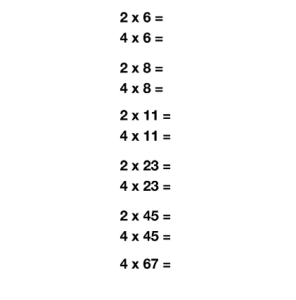
With this number string, students are practicing their facts AND they’re connecting a strategy they have for single-digit multiplication to the multi-digit numbers at the same time.”
Or:
“What if you start each lesson with a 5-minute number talk using the facts they’re working on? So if they’re struggling with 6s and 7s, you do a number talk around 6 times 8 or 7 times 9 with students sharing the different ways they think about it. They’re building fluency, they’re reminded of strategies they have, but it’s embedded in your regular instruction—not a separate ‘catch-up’ lesson and they will then take that thinking into the rest of the lesson.”
The key message you’re giving the teacher is:
“You don’t have to choose between addressing gaps and moving forward. You can do both at the same time.”
And here’s why this is so powerful: It takes away the guilt and the panic. Teachers don’t feel like they’re failing their students by not stopping everything to reteach. They feel empowered because they have a plan that addresses both needs.
STRATEGY #3: NORMALIZE THE STRUGGLE (AND THE TIMELINE)
The third strategy is to help teachers normalize where students are—and how long it’s going to take to get them where they need to be.
Because here’s what’s happening: Teachers are comparing their current students to pre-pandemic students. And that comparison is making them feel like failures.
They’re thinking, “My third graders should be here by now. What am I doing wrong?”
And the answer is: You’re not doing anything wrong. Your students are starting from a different place.
So your coaching move is to normalize the struggle and reset expectations around the timeline. Now if only we can get the higher ups in education to understand that!?!?
Now, logically teachers might push back and say, “But they’re going to be tested on grade-level standards. I can’t just lower my expectations.”
And here’s how you respond:
“I’m not saying lower your expectations. I’m saying adjust your timeline. We’re still aiming for grade-level standards, but we’re going to scaffold the heck out of it to get them there. And we’re going to celebrate the growth along the way.”
You can also share data to back this up. You might say:
“Math recovery is taking longer than reading recovery. That’s what the research is showing. So if it feels like it’s taking forever to get students where they need to be, that’s because it IS taking longer. But that doesn’t mean it’s not happening.”
The goal here is to help teachers shift from:
- “They should already know this” (which is really frustration and blame)
To:
- “They don’t know this yet, but here’s how we’re going to help them get there” (which leads to action and hope)
And honestly, that mindset shift is one of the most powerful things you can do as a coach.
BRINGING IT ALL TOGETHER
So let’s recap those three strategies for addressing the “they should already know this” mindset:
Strategy #1: Help teachers identify the actual gap. Get specific about what students do and don’t know so it feels manageable, not overwhelming.
Strategy #2: Reframe “catching up” as “building forward.” Show teachers how to address foundational gaps within the context of current instruction—they don’t have to choose between the two.
Strategy #3: Normalize the struggle and the timeline. Help teachers see that where students are isn’t a reflection of their teaching—it’s the reality we’re all working with. And progress takes time.
Now, I know this is just scratching the surface. There’s so much more we could talk about when it comes to post-pandemic students and teaching them.
Which brings me to the Virtual Math Summit.
If you’re feeling like your coaching strategies need an update for this generation of students, I’ve got some sessions you absolutely need to see.
First, Jen Hunt is doing a session called “Coaching Math Teachers Who Teach a Different Generation.” She’s diving into the research on how post-pandemic students are different—and she’s giving you research-backed strategies and ready-to-use tools to help teachers adapt. This is exactly what we’ve been talking about today.
Now, if you’re coaching teachers who are stuck in that “they should already know this” mindset, here are three more sessions that will help, heck even send them to get registered for the summit so they can watch for themselves…sometimes it helps for the teachers we work with to hear it from outside sources:
Graham Fletcher is doing a keynote on Asset-Based Assessment. And this is the heart of what we’ve been talking about—using assessments to see what kids CAN do, and then working to guide their learning through a progression. This is the reframe your teachers need.
Ann Elise Record has a session for 3rd-5th grade teachers on building Multiplicative Reasoning. And here’s why this matters: So many upper elementary teachers are frustrated because their students are still using repeated addition instead of multiplicative reasoning. Ann Elise is going to acknowledge where students currently are and give teachers ways to move students forward. That’s exactly the “building forward, not going back” approach we talked about.
And Dr. Sue Looney has a session for PreK-2 teachers on taking kids From Naming to Knowing when it comes to geometry. She’s laying out the progression for developing geometry concepts so teachers can see where students are in the progression and what comes next. When teachers understand the progression, they can meet students where they are and move them forward—instead of just being frustrated that they’re not where they “should” be.
All four of these sessions will give you and your teachers the tools to shift from “they should know this” to “here’s where they are and here’s how we move them forward.”
And they’re completely free.
Go to VirtualMathSummit.com and get registered. The sessions will be live on February 28th and March 1st but if you can’t attend live there is a limited replay time so get registered. There are over 30 sessions for coaches and teachers.
Go to VirtualMathSummit.com to register for free.
Alright, my fellow Recovering Traditionalists, I hope this helped build your math mind so you can build the math minds of your students.
Have a great day!
Subscribe and Review in iTunes
Other Ways to Listen To This Episode




Pin This To Pinterest for Later